Skills
Monetizing Open Source
How to turn open source adoption and community into sustainable commercial revenue. Covers pricing models, packaging strategies, open core frameworks, the free-to-paid conversion, dual licensing, and managing community expectations through monetization changes. Drawn from practitioners at GitLab, dbt Labs, HashiCorp, and others.





- +19
AI Observability
Continuous validation and production monitoring for AI systems. Covers the unique challenges of observing non-deterministic outputs, bridging technical and business metrics, and connecting observability data to code and user experience. Drawn from practitioners at Deepchecks, PlayerZero, and others.





- +16
Developer Communities
How to build, measure, and scale developer communities that create real business value. Covers community strategy, engagement models, community health metrics, champion programs, and balancing community interests with business goals. Drawn from practitioners at Twilio, MongoDB, DigitalOcean, and others.





- +18
Developer Onboarding & Documentation
Frameworks for developer onboarding design, documentation strategy, and using technical content to drive adoption. Covers getting-started experiences, API documentation, onboarding measurement, documentation as a growth lever, and building docs teams. Drawn from practitioners at ReadMe, Netlify, Stripe, and others.




- +5
Agentic Engineering
How teams build software when AI coding agents write the code: directing agents, what code review and validation become when code is nearly free, durable systems with disposable code, orchestrating many agents, keeping them safe inside an organization, and how roles change. Drawn from practitioners at HumanLayer, Sentry, Honeycomb, Google DeepMind, and others.



- +15
Agent Infrastructure
The runtime substrate for AI agents: the machine an agent runs on, sandboxes and isolation, agent memory and learning, durable execution and harness design, and the performance and cost of running agents. Drawn from practitioners at exe.dev, Daytona, Letta, Glean, and others.




- +13
Content from the Library
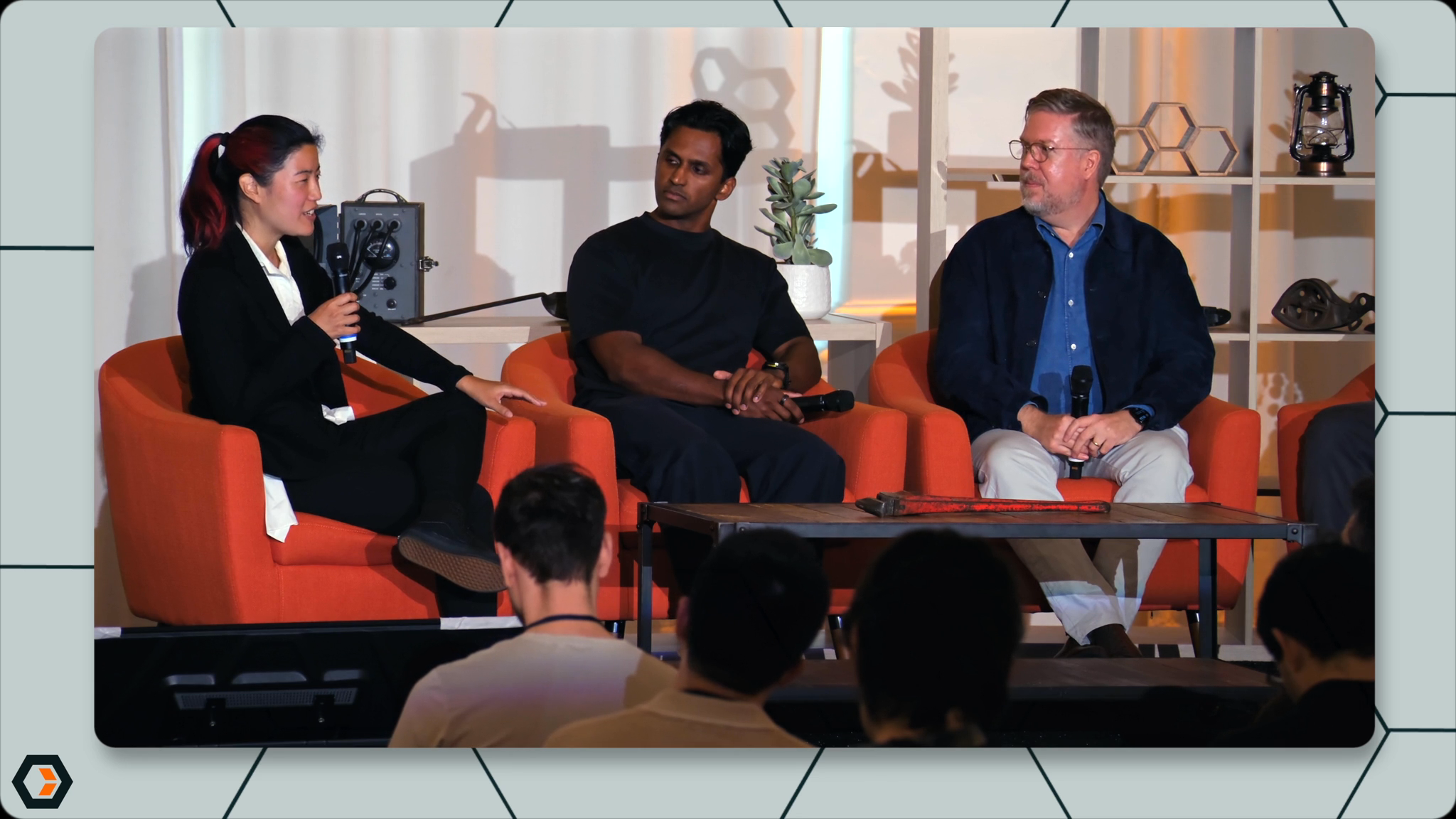
Harness vs. Model: Where Specialization Belongs
As agentic systems reach production, teams keep hitting the same fork: push capability into the model through post-training, or into the harness through orchestration, retrieval, and tool use. Panelists from Generationship, Baseten, Fireworks AI, and Paper Compute weigh when fine-tuning pays off, how to choose between open and closed models, and what it takes to serve custom models.

Open Source Ready Ep. #42, When Forking Becomes a Feature with Will Cory
On episode 42 of Open Source Ready, Brian Douglas and John McBride sit down with Will Cory, creator of Smithers. Will explains how workflows can simplify agent orchestration and why AI-assisted development could make specialized open source forks more practical. They also explore his planned TypeScript redesign, the trade-offs behind agent tooling, and what maintainers can learn from users who build their own solutions.
Open Source Ready Ep. #41, Containers at the Edge of AI with Phil Estes
On episode 41 of Open Source Ready, Brian Douglas and John McBride sit down with Phil Estes. They explore why the definition of a container remains surprisingly fuzzy, how microVM-backed sandboxes could support the next generation of AI agents, and what AI-generated contributions mean for projects like containerd. Phil also explains why the future of open source depends as much on trusted maintainers and healthy communities as it does on code.