The Developer Content Mind Trick for Signature Content

Adam DuVander is a developer, marketer, and founder of EveryDeveloper. He helps great dev tool companies reach more of the right developers with content. Previously, he worked for Zapier, SendGrid, and ProgrammableWeb. In this post, Adam shares a powerful technique for dev tool founders, marketers, and content managers.
A landspeeder approaches a checkpoint, waved to slow down by a group of stormtroopers. You’re likely familiar with the line that comes next: “These aren’t the Droids you’re looking for.”
The Jedi mind trick, i.e. using the Force to implant a suggestion in the minds of those they encounter, is a useful tool on Tatooine, but it also has value in the way your org approaches developer content and in the content itself; in order to promote your product, you don’t promote it. In another Heavybit post on editorial strategy for technical SaaS, I recommend you educate and inspire developers with the content you publish.
Even though content plays an important marketing role, it shouldn’t feel like marketing. Tap into the problems developers face and how developers can solve them on their own.
The developer content mind trick is especially powerful for foundational resources, which I call signature content. Signature Content:
- Describes the developer problem;
- Explains how to build the solution; and,
- Gives you authority by demonstrating your deep understanding of the topic.
As a devtool company, your biggest competition is a team attempting to build in-house, so it may seem counterintuitive to point a potential customer in that direction. Some readers will go on to build the solution themselves. But many others will realize it’s harder than it looks—and you’ll be the best company to provide a solution.
Declare Your Company Keywords
The developer content mind trick is not just an SEO tactic, but executed well, it will improve your search rankings. You’ll want to carefully consider the keywords you use to describe your signature content. These keywords should both match terms your customers use and be relevant to the product or service you provide.
Focus on the problems or solutions developers search for when they (hopefully) discover you. Chances are you already know what two or three words this is for your company. It’s likely one of the primary problems upon which your company was founded.
For example, let’s say your product gives e-commerce stores a better search function. Users can restrict by category (such as women’s clothing or a specific brand) to drill down to their preferred results. It’s a powerful user feature, but non-trivial for a developer to build.

A developer may start to research “faceted search,” the name for that kind of category-driven narrowing. At this point they’re looking to better understand the topic, so they can figure out what it would take to build. It has not occurred to them yet to use your product and they would probably be resistant anyway. Developers like to build things and, surely, faceted search can’t be that hard.
You want your signature content to show up during this developer’s research. When they find it, your guide will teach them how to implement your technical solution, even without your product.
The results for “faceted search” show Wikipedia in the top spot, with a bunch of thumbnails that push the rest of the results down. However, there’s room on that first page for your guide, even if you don’t beat out Wikipedia. It’s ok not to rank #1, because developers researching a problem will dig deeper than the typical searcher.
That said, you should spend time making sure your keywords are things developers search. Use an SEO tool, such as ahrefs or Moz, to find estimated search volume and additional keyword ideas. Look at the existing search results to get an idea of how Google sees the search intent of your terms. Make sure your signature content has a place on these and similar results pages.
Give Developers a Blueprint
When I worked at SendGrid, we had a number of guides to educate would-be customers about email. The most successful at converting developers to paid accounts was the Deliverability Guide. Within a nine page PDF (the current version is longer and in HTML), the team shared exactly what’s needed to have your email reach the inbox. At a high level, this guide said: here’s how you build SendGrid. Your signature content should take the same approach, but go even deeper.
“Give developers a blueprint,” as LaunchDarkly Founder and CEO Edith Harbaugh would say. If a potential customer is unsure of whether to build or buy, show their developers exactly how to build. When they see how hard it is—either through your detailed guide or trying it on their own—many will return to buy your solution. That’s the mind trick in action.
Of course, it’s not really a trick. Nobody wants to be fooled. Instead, you’ve proven to developers your expertise and earned their consideration. To achieve that level of respect, you can’t throw 300 words on a page and surround it with links to your signup page. You’ll need to create a comprehensive guide that acknowledges and addresses developer pain points.
It can be tempting to dive straight into implementation details, but the guide should set the context at a higher level first. Some sections to consider:
- Introduction: What is your topic and why is it important?
- Use cases: Why would someone build this solution?
- How it works: What are some common approaches to solve this problem?
- Tutorial: How can a developer try out an example implementation?
- Resources: What are the next steps and further reading?
We used a similar approach for OpenCage’s Reverse Geocoding Guide, each section getting its own page. You might find that other sections make sense for your topic, or that you need less space to cover it. You can still achieve the goals of signature content without it being so dense that it’s inaccessible.
Remember, you’re not promoting your product within this guide. It’s general education around a problem your product also solves. While your other developer tutorials may rely on your product as an example, this is not the place for it. If any list of steps begins with ‘Sign Up for an Account,’ you’re doing it wrong.
Beware of overcorrecting and being overly anti-promotional. This guide resides on your website so it’s alright to mention your product. Reinforce your educational message with examples from your own work solving this tough developer problem because your experience building the product lends credibility to your guide.
Develop Your Signature Content
Crack open one of the original Macintosh computers and you’ll see signatures from the designers inside the case. The story goes that Steve Jobs insisted upon this engraving because painters sign their canvases. You don’t need to see your work as art, but you do want to show reverence for this guide that will represent your company to the developers who find it. I call it signature content because it endorses the topic’s importance.
There’s a well-known SEO approach called the Skyscraper technique. Basically, you write one giant blog post attempting to cover everything that’s ever been written about the topic, and make it even better. You can certainly approach signature content this way. However, to place this guide as yet another blog post would be a missed opportunity. Ideally, you’re creating something you’d want to link in the footer—maybe even header—of every page on your site.
You should use your signature content to increase search traffic, referrals, links, and interest on your site. A well-designed web page (or collection of multiple pages) is likely the best approach.
On that note, some in your org may be tempted to gate your helpful guide behind an opt-in form. While you gain trackable leads with this approach, you miss the SEO benefits. Plus, skeptical developers will be much less likely to trust you (look through the email addresses they use if you try this and see just how many are business addresses).
Often a gated guide is in PDF format. Developers almost always prefer HTML. That doesn’t mean you can’t provide a PDF option, like Gremlin does with its Chaos Monkey Guide for Engineers.
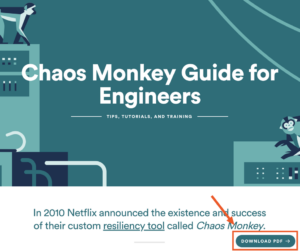
Regardless of the format, allocate budget or time to help your signature content stand out:
- Commission original illustrations or diagrams
- Incorporate an authentic technical voice
- Build interactive tools to help explain concepts
- Expand the content so it goes deep into the topic
Now that you have a foundational content piece, promote it on your site, as well as externally. Call out to it in relevant places and use it in onboarding emails. Partner with a developer community to share your knowledge. Most importantly, watch the results, so you can tweak or revise to make it an even more powerful piece of content.
Subscribe to Heavybit Updates
You don’t have to build on your own. We help you stay ahead with the hottest resources, latest product updates, and top job opportunities from the community. Don’t miss out—subscribe now.
Content from the Library
Refreshing Developer Content to Maximize AEO/GEO
Content expert Karl Hughes offers actionable tips to update developer content to optimize it for GEO to appear in LLM searches.
Developer Content in the Age of AI
How should startups think about using content to reach technical audiences in the age of AI? Technical content expert Oleksii Klochai explains.
A Guide to SEO in the Age of AI, Plus Modern Best Practices
Ashley McClelland and Justin Dunham of content performance agency ércule explain how startups can prepare their SEO strategy for the age of AI.